

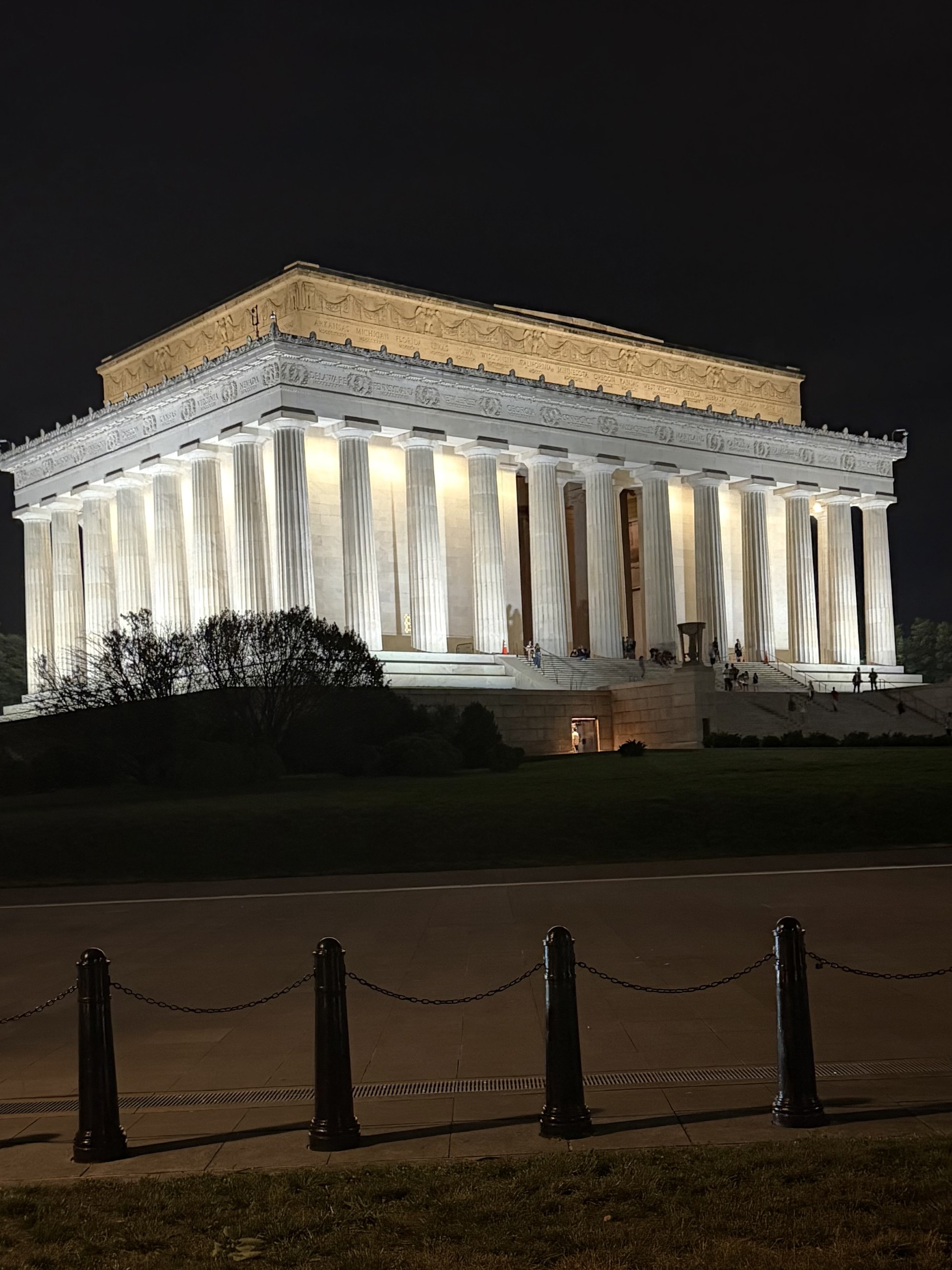
This week, I walked past the Lincoln Memorial and the Reflecting Pool here in Washington, D.C. The Reflecting Pool wasn’t American blue – it was very, very green. Still, at night it was breathtaking. There is something about standing in front of the Lincoln Memorial after dark that creates a sense of reverence. You can’t help but reflect on the enormous obstacles Abraham Lincoln faced and overcame to shape our nation. His legacy lives on because of the courage, humility, and conviction he demonstrated during one of the most difficult periods in American history. I took that picture on my walk.
Earlier that same day, I had the privilege of hearing Doris Kearns Goodwin speak at the NAR Legislative meetings I am attending. If you don’t know who she is, you should. She is a presidential historian, Pulitzer Prize-winning author, and former White House staffer who worked in the Lyndon Johnson administration. Her late husband, Richard Goodwin, was a speechwriter for Presidents Kennedy and Johnson. Talk about an interesting dinner table. I wish I could have had an invitation.
She first came onto my radar in 2019 when I saw her being interviewed about selling her Massachusetts farmhouse and moving to a high-rise in New York City. So, hearing her speak was a real treat. I think she may be one of the smartest and funniest women on the planet. She has spent decades researching presidents and writing biographies, giving her a unique perspective on leadership, resilience, and the human side of history.
One of the themes she spoke about was what to do when we feel powerless. Her answer was simple: look to history.
Look at Lincoln and his fight to preserve the Union and end slavery. Look at Franklin and Eleanor Roosevelt as they navigated the Great Depression and World War II. Eleanor, in particular, was a remarkable leader in her own right. While FDR battled the effects of polio, she traveled the country, advocated for Americans who had no voice, and blazed trails for women in government and journalism. At a time when women were excluded from many White House press briefings, she held her own – and invited only women reporters so they could have opportunities that otherwise did not exist.
Doris also shared the story of George Washington. As our first leader, there was discussion about giving him titles such as “Your Majesty” or “Your Highness.” Washington rejected the idea. Power, he believed, was temporary and belonged to the people. When the title “President” was suggested, some thought it sounded too ordinary, more like the head of a company than the leader of a nation. Washington embraced it. That humility helped define the office and the country.
And then there was Eleanor Roosevelt again. When war broke out, America had only about 500 military aircraft. By the end of the war, the nation had built hundreds of thousands, due in no small part to Eleanor’s influence. She successfully pressured the government to employ women in defense industries and lobbied for on-site daycares to allow mothers to join the war-production workforce. Nearly 40% of the wartime manufacturing workforce was women during World War II, and at one point a plane was rolling off an assembly line every 4 minutes. For perspective, today it takes 2 to 3 years to manufacture a fighter jet.
The message of Doris Kearns Goodwin’s presentation was simple but powerful. When the challenges of today seem overwhelming, look to history. Look at the obstacles that previous generations faced. Look at the wisdom, dignity, humility, and perseverance of leaders who built legacies far bigger than themselves.
Then look at whatever challenge is in front of you today.
We will get through it too.
I’ll leave you with a quote that Franklin D. Roosevelt loved. Having navigated immense physical and political adversity after surviving polio, it is easy to understand why these words resonated so deeply with him:
“The world breaks everyone and afterward many are strong at the broken places. But those that will not break, it kills.”
— Ernest Hemingway
History reminds us that hardship is not the end of the story. More often than not, it is where strength is forged.